Mar 13, 2026
Brazil Soybean Estimate Unchanged at 178.0 Million Tons
Author: Michael Cordonnier/Soybean & Corn Advisor, Inc.
Rainfall in Brazil last week favored northern and eastern areas. Over the weekend southern Brazil received some rain and there is more in the forecast for this week. The driest areas are Rio Grande do Sul, northern Parana, and Sao Paulo and those regions are expected to receive some rain this week.
Brazil soybeans were 51% harvested as of late last week compared to 61% last year. This represents an advance of 12% for the week.
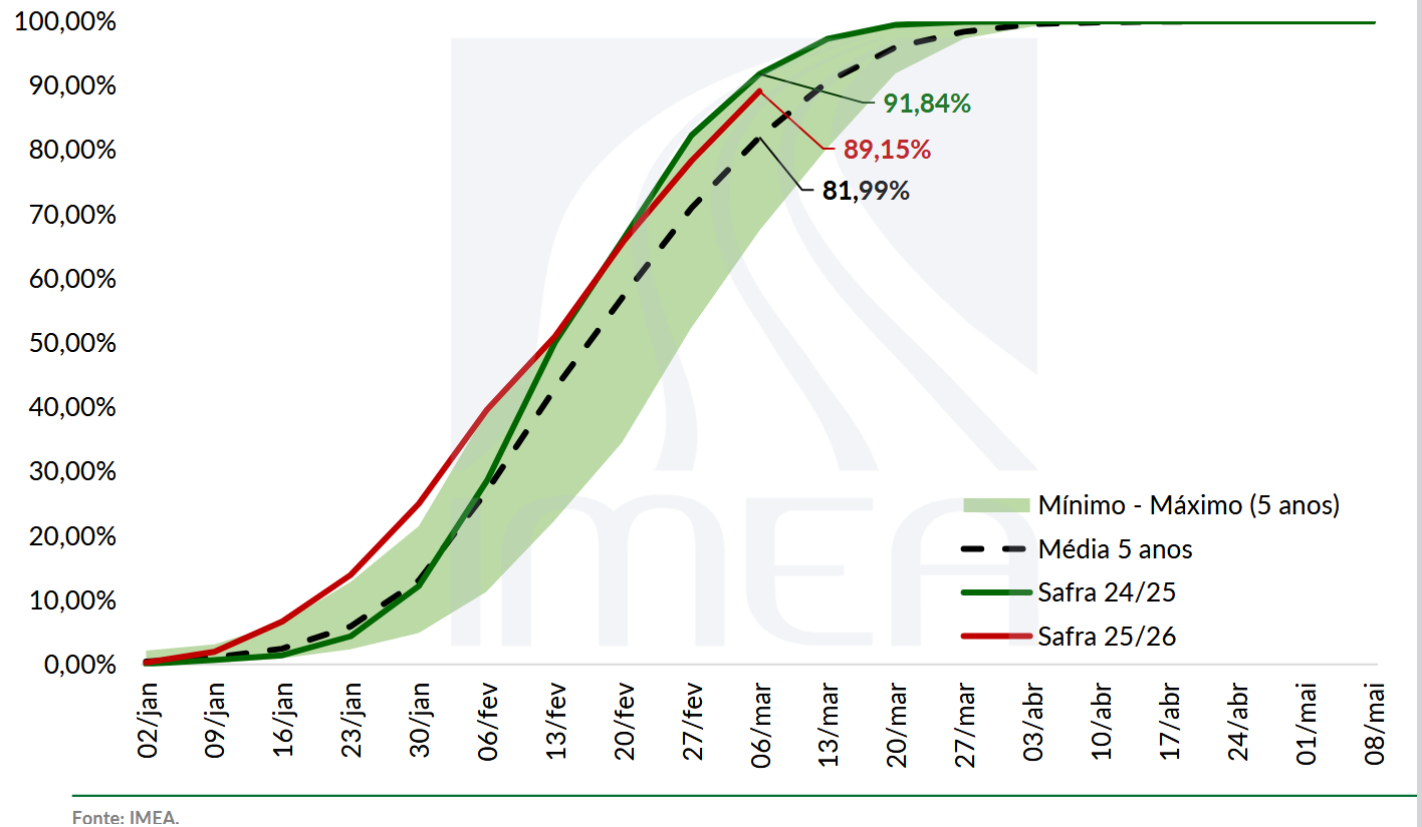
Mato Grosso - Soybeans in Mato Grosso were 89.1% harvested as of late last week compared to 91.8% last year and 82% average. This represents an advance of 10.8% for the week. Below is the soybean harvest progress in Mato Grosso for March 6, 2026 from Imea.
Parana - Soybeans in Parana were 55% harvested as of late last week.
Rio Grande do Sul - The remaining big unknown in Brazil is the soybean production in Rio Grande do Sul. The soybeans in the state are 18% flowering, 67% filling pods, 11% mature, and less than 1% harvested. Recent rains have promoted a partial recovery of the crop, but much more is needed. Prior to the recent rain, some areas had been dry for up to 30 days with yield losses of 30% or more. Estimated losses in the state range from 2 to 5 million tons, but the final number will depend on rainfall in March and April.
I left my Brazilian soybean estimate unchanged this week at 178.0 million tons with a neutral to lower bias. There is a range of opinions among analysts in Brazil concerning the Brazilian soybean production. In recent weeks, some estimates have increased while some estimates have declined. The estimates today range from a low of about 175.0 million tons to a high of 183.0 million tons. Conab will issue their next estimate on Friday, March 13th.
Agroconsult increased their 2025/26 Brazil soybean estimate 850,000 tons last week to 183.1 million. They indicated that the estimate is preliminary because they had not surveyed the state of Rio Grande do Sul where they estimate losses of 2 million tons due to hot and dry weather at the beginning of the year.